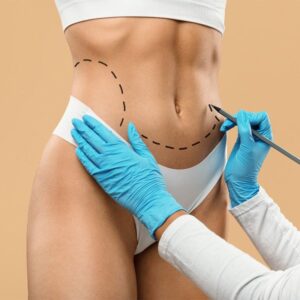
Suction-assisted liposuction is the original, foundational liposuction technique — the method from which nearly every modern liposuction variation has evolved. Reliable, wellstudied, and effective for overall body contouring, SAL remains a trusted choice for many patients today, especially when combined with the tumescent fluid technique for added safety and comfort. At Aakar Aesthetics, Dr. Kiran Nerkar performs suction-assisted liposuction in Nashik with meticulous surgical technique aimed at smooth, natural, and long-lasting body contours.
This page explains what suction-assisted liposuction involves, who benefits most from it, and how it compares to the more advanced, energy-based liposuction techniques also offered at our clinic.
What Is Suction-Assisted Liposuction?
Suction-assisted liposuction (SAL) is the traditional, manual method of liposuction. Unlike laser-assisted or ultrasound-assisted techniques, which use energy to liquefy fat before removal, SAL relies entirely on the surgeon’s controlled, manual back-and-forth movement of a thin hollow cannula to physically break up and loosen fat cells. Once loosened, the fat is suctioned out of the body using a surgical vacuum device or a large syringe attached to the cannula.
Because SAL does not depend on external energy sources like lasers or ultrasound, it is considered a simpler and, in many respects, a more universally applicable liposuction technique — suitable for a wide range of body areas and fat types. Today, SAL is almost always combined with the tumescent technique, meaning a solution of saline, local anesthetic, and a vessel-constricting medication is infused into the treatment area first to reduce bleeding and improve patient comfort.
How the Suction-Assisted Liposuction Procedure Works
-
Consultation and Surgical Planning
Dr. Kiran Nerkar assesses your treatment goals, the areas of concern, your skin quality, and your overall health to determine whether SAL, combined with the tumescent technique, is the right approach.
-
Anesthesia and Tumescent Fluid Infusion
Depending on the extent of the procedure, local anesthesia with sedation or general anesthesia may be used. The tumescent solution is infused into the target area to numb the tissue and minimise bleeding during surgery.
-
Incision and Cannula Insertion
Small incisions, often just a few millimetres long, are made near the treatment area. A thin hollow cannula is inserted through these incisions into the fat layer.
-
Manual Fat Loosening and Suction
The surgeon manually moves the cannula back and forth in a controlled, systematic pattern to mechanically break up fat cells. As the fat is dislodged, it is simultaneously suctioned out through the cannula using a vacuum device or syringe.
-
Contour Assessment
Throughout the procedure, the surgeon continually checks the treated area from multiple angles to ensure even, symmetrical fat removal and a smooth final contour.
-
Closure and Compression
Incisions typically require minimal or no stitches. A compression garment is fitted to support the treated tissue and control swelling as healing begins.
-
Recovery
Most patients are discharged the same day. Some swelling, bruising, and mild soreness are expected as part of normal healing.
Key Benefits of Suction-Assisted Liposuction
- Proven, Long-Standing Track Record:SAL has been performed and refined for decades, giving surgeons extensive clinical experience and predictable, wellunderstood outcomes.
- Versatility Across Body Areas: SAL can be effectively used on virtually any part of the body suitable for liposuction, from the abdomen and thighs to the arms and back.
- No Energy-Related Risks:Because SAL does not use lasers or ultrasonic energy, it avoids the small risk of thermal injury associated with energy-based liposuction techniques.
- Cost-Effective Option: As a well-established, equipment-light technique, SAL is often a more accessible option compared to technology-driven alternatives.
- Effective for Larger Volume Removal:SAL is well suited to procedures involving larger areas or greater fat volumes, where efficient mechanical removal is the priority.
Areas of the Body Treated with Suction-Assisted Liposuction
- Abdomen and waist
- Hips and flanks
- Thighs (inner, outer, and posterior)
- Buttocks contouring
- Arms
- Back
- Chest (including gynecomastia in select cases)
- Chin and neck (in smaller volumes)
Because SAL is a highly adaptable technique, it remains one of the most commonly used approaches for comprehensive, full-body contouring plans that involve multiple treatment areas in a single session
Am I a Good Candidate for Suction-Assisted Liposuction?
You may be a good candidate for SAL if you:
- Are within a healthy weight range and close to your ideal body weight
- Have reasonably firm, elastic skin that can adapt smoothly to your new contour
- Have localized fat deposits in one or more areas that haven’t responded to diet and exercise
- Are a non-smoker, or are willing to stop smoking well before and after surgery
- Are in good general health with no uncontrolled medical conditions
- Have realistic expectations about the results liposuction can achieve
During your consultation, Dr. Kiran Nerkar will evaluate your goals and anatomy to confirm whether traditional SAL, or a combination with an energy-based technique, will best achieve your desired outcome.
Recovery After Suction-Assisted Liposuction
-
Day 1–3:
Swelling, bruising, and mild discomfort are common in the initial days. Compression garments should be worn as directed to support healing.
-
Week 1
Most patients can return to light daily activities within a few days, while avoiding strenuous exercise.
-
Weeks 2–4
Swelling gradually reduces, and the new body contour becomes increasingly visible.
-
Weeks 4–6
Most patients are cleared to resume regular exercise routines.
-
3–6 Months
Final, refined results become fully apparent as all residual swelling and fluid retention resolve completely.
Consistent use of compression garments, adequate hydration, and light activity as advised by your surgeon all contribute to smoother healing and more even final results.
Suction-Assisted Liposuction vs. Other Techniques
SAL vs. Tumescent Liposuction:
In modern practice, SAL is typically performed in combination with the tumescent fluid technique, meaning most “tumescent liposuction” procedures are, technically, tumescent-enhanced SAL. The tumescent fluid adds a safety and comfort layer to the traditional SAL approach.
SAL vs. Ultrasound-Assisted Liposuction (UAL):
UAL pre-liquefies dense, fibrous fat using ultrasonic energy, which can make fat removal easier in tough areas like the back or male chest. SAL relies purely on mechanical cannula movement, which may require more surgeon effort in fibrous zones but works well for most standard fat types.
SAL vs. Laser-Assisted Liposuction (LAL):
LAL adds a skin-tightening benefit through laser-stimulated collagen production, which SAL does not offer. However, SAL is often better suited for larger-volume fat removal where skin tightening is not the primary concern.
SAL vs. Power-Assisted Liposuction (PAL):
PAL uses a mechanically vibrating or oscillating cannula to reduce the physical effort required from the surgeon and can shorten procedure time, particularly in larger or more extensive treatment plans, while SAL relies entirely on manual cannula control.
Risks and Safety Considerations
As the original liposuction technique, SAL carries the standard risks associated with any liposuction procedure, including infection, scarring, bruising, temporary numbness, fluid imbalance, and contour irregularities if the technique is not performed with careful, even technique. Because SAL depends heavily on the surgeon’s manual skill and experience, choosing a board-certified plastic surgeon with substantial hands-on liposuction experience is particularly important for achieving smooth, symmetrical results.
What Determines the Cost of Suction-Assisted Liposuction in Nashik?
Cost factors for SAL include:
- Number and size of treatment areas
- Volume of fat to be removed
- Type of anesthesia required
- Whether the procedure is combined with an energy-based technique for specific zones
- Facility and post-operative care requirements
Dr. Kiran Nerkar will provide a personalised cost estimate following a detailed consultation and assessment of your treatment goals.
Why Choose Aakar Aesthetics for Suction-Assisted Liposuction?
Dr. Kiran Nerkar, a Board Certified Plastic & Aesthetic Surgeon trained in Pune and Kerala, brings meticulous surgical technique and years of hands-on experience to every suctionassisted liposuction procedure performed at Aakar Aesthetics. Because SAL depends significantly on surgical skill rather than equipment alone, patients benefit from Dr. Nerkar’s precise, symmetrical approach to fat removal and his commitment to safe, natural-looking body contouring from consultation through full recovery.
Frequently Asked Questions About Suction-Assisted Liposuction
Is suction-assisted liposuction the same as traditional liposuction?
Yes, SAL refers to the classic, original liposuction technique that relies on manual cannula movement and suction, forming the basis from which other advanced techniques were later developed.
Is SAL as effective as newer liposuction techniques?
For most standard bodycontouring goals, SAL remains highly effective, particularly for larger treatment areas. Newer, energy-based techniques offer specific advantages — such as skin tightening or improved results in fibrous fat — that may be recommended for particular cases.
Does suction-assisted liposuction hurt?
When combined with tumescent local anesthesia, most patients experience manageable discomfort during and immediately after the procedure.
How long does the SAL procedure take?
Procedure time depends on the number and size of areas treated, generally ranging from one to three hours for a typical case.
Is suction-assisted liposuction safe?
When performed by an experienced, board-certified plastic surgeon in a properly equipped facility, SAL has a strong, decades-long safety track record.
How soon can I see results after suction-assisted liposuction?
Initial improvements are visible within a few weeks as swelling subsides, with final results typically appearing between three and six months after surgery.